
What Causes Fatty Liver: It's Not Just the Fat You Eat
When people hear “fatty liver”, most assume it comes from eating too much oily or fried food. But did you know that only about 15% of the fat in a fatty liver actually comes from what you eat? So what’s really behind non-alcoholic fatty liver disease (NAFLD)? And which everyday foods should you be watching out for?
Eating fatty food is not the single main cause of fatty liver disease. Most liver fat in non-alcoholic fatty liver disease (NAFLD) comes from fat released by your own body fat and fat the liver makes from sugar. The biggest drivers are excess calories, added sugar (especially fructose), refined starch, ultra-processed foods and insulin resistance. Saturated and trans fats still matter and can make things worse.
What is non-alcoholic fatty liver disease (NAFLD)?
Non-alcoholic fatty liver disease means fat makes up more than 5% of your liver, without heavy alcohol use being the cause. It affects about 38% of adults worldwide [1] [2]. It is often silent, but in some people it leads to liver inflammation (non-alcoholic steatohepatitis, or NASH) and scarring.
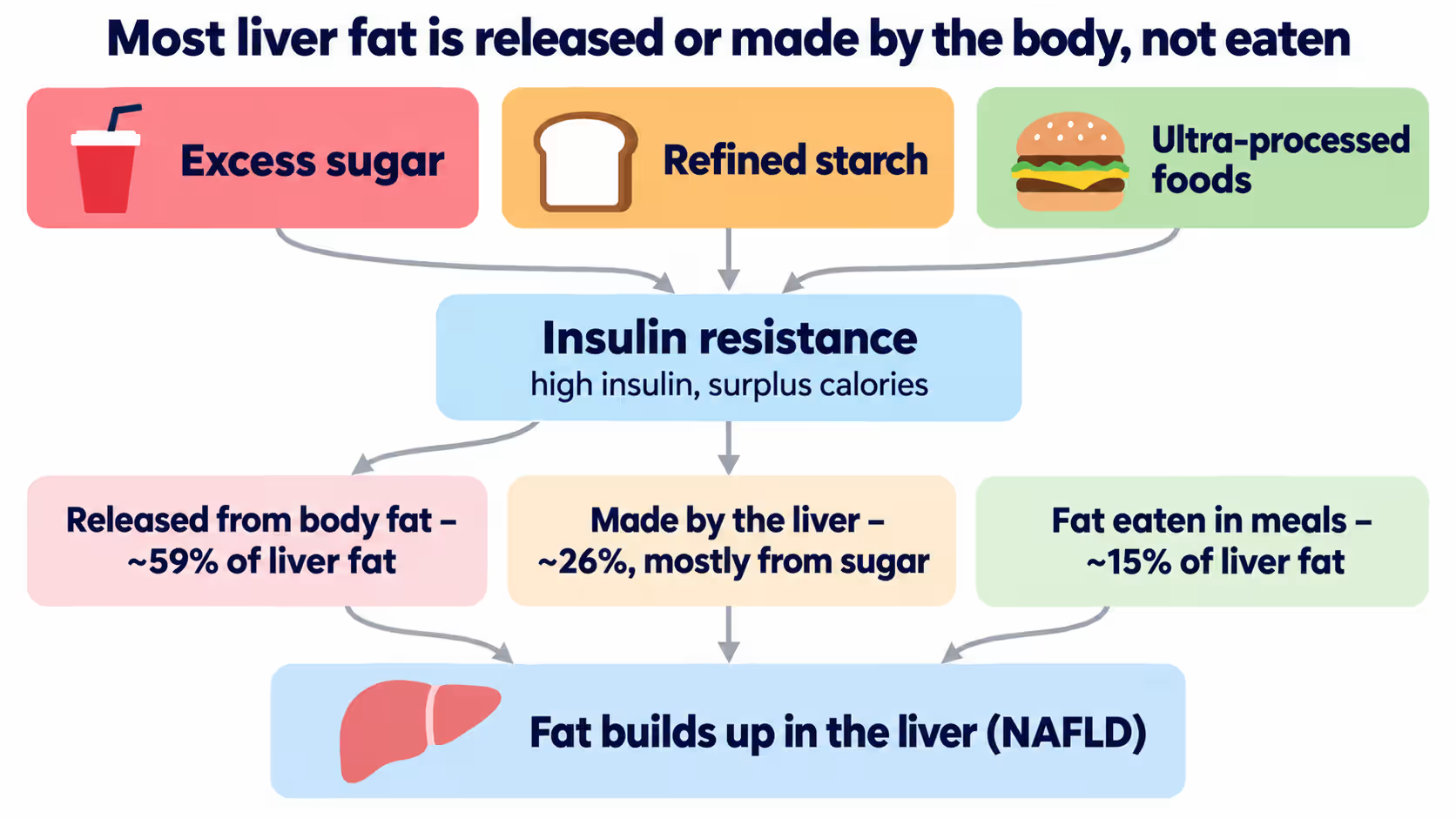
Here is the surprise: only about 15% of the fat in a fatty liver comes straight from the food you eat. About 59% is released from your own body fat, and about 26% is made by the liver itself, mostly from sugar [3]. That is why excess sugar, refined starch and ultra-processed foods are bigger drivers than fatty food alone.
How sugar, refined starch and processed foods affect your liver
1. Fructose (added sugar)
Fructose is especially hard on the liver. The liver processes almost all of it, and when there is too much, it turns the extra directly into fat inside liver cells. This is called de novo lipogenesis, and fructose triggers it more strongly than glucose [4] [5].
Common culprits: sugary drinks, bubble tea, candy and sweetened snacks.
2. Refined starch
Refined starches digest quickly, spike your blood sugar and push insulin up. High insulin signals the liver to make and store fat, and this signal keeps working even when the body becomes insulin resistant [6]. NIH recommends choosing low-glycemic foods like whole grains, fruit and vegetables instead [7].
Common culprits: white rice, white bread, croissants and pastries.
3. Ultra-processed foods
Ultra-processed foods combine refined carbs, added sugar and unhealthy fats, and they are very easy to overeat. In an NIH trial, people ate about 500 more calories a day on an ultra-processed diet than on a minimally processed one with the same nutrients [8]. Studies also link eating more ultra-processed food to a higher risk of fatty liver [9].
Common culprits: burgers, fries, chips, instant noodles and cookies.
The result: more fat in the liver, driven by insulin resistance
All three drivers push your body towards insulin resistance, the root cause of most fatty liver. When cells stop responding to insulin, body fat leaks fatty acids into the blood and the liver keeps making new fat. A fattier liver then worsens insulin resistance, creating a vicious circle.
But don't write off dietary fat
Fat is a supporting actor, not off the hook. In one trial, overweight adults ate an extra 1,000 calories a day for three weeks. Liver fat rose 55% with saturated fat, 33% with sugar and 15% with unsaturated fat [10].
> Saturated and trans fats can worsen liver inflammation once fat has built up.
> A high-fat, high-calorie diet still causes weight gain, which increases liver fat.
> It is not “fat in food, fat in liver”. Excess energy, insulin resistance and fructose are what make liver fat.
Solutions: simple everyday choices
The good news is that fatty liver can often be reversed. Losing just 3–5% of your body weight can reduce liver fat, and 7–10% can reduce inflammation and scarring [11]. Aim for gradual weight loss, not crash diets.
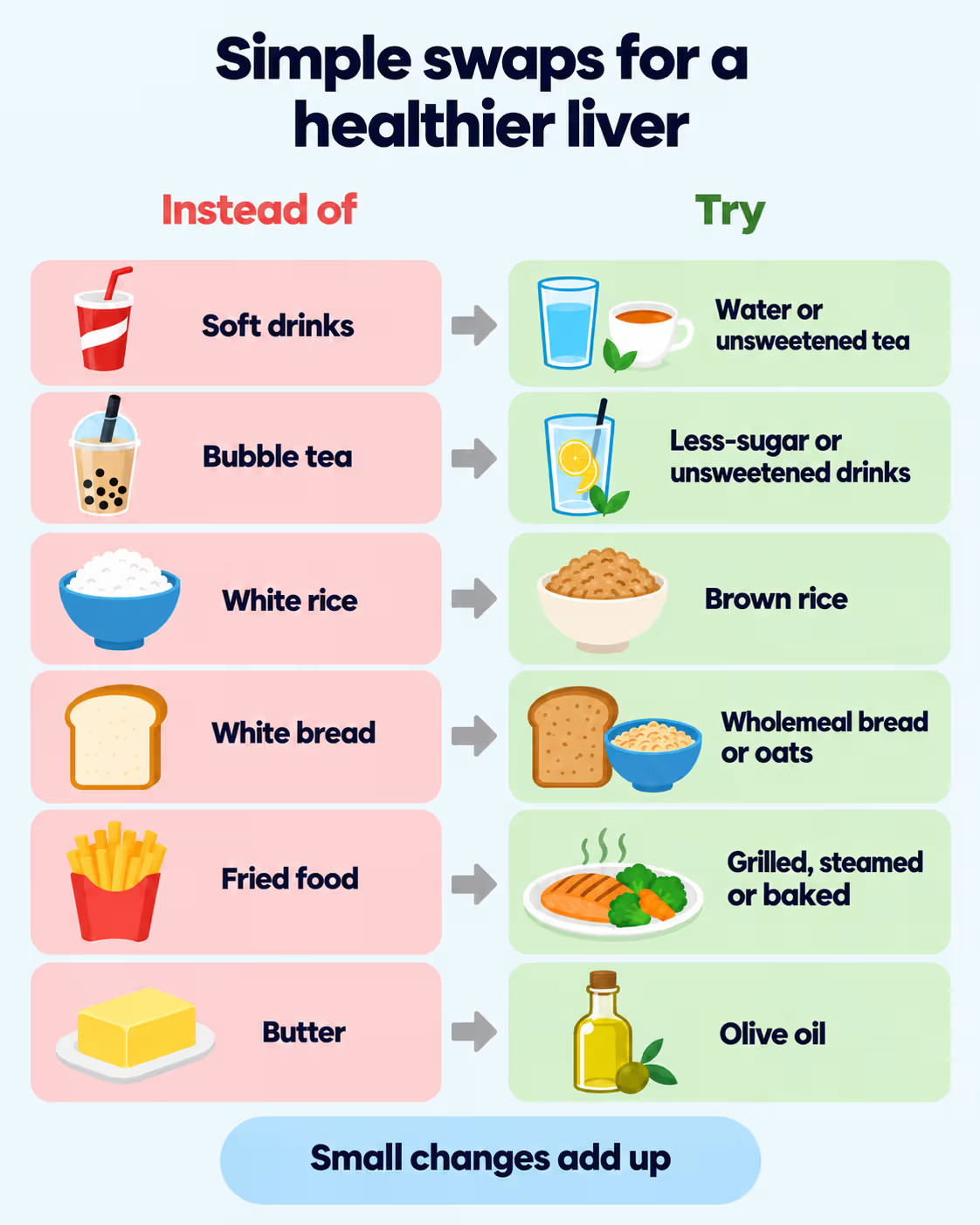
> Cut sugary drinks first, including soft drinks, juice drinks and bubble tea.
> Swap white for whole grains: brown rice, wholemeal bread and oats.
> Cook more, buy fewer packaged foods.
> Choose better fats: olive oil, nuts and oily fish instead of butter, fatty meat and fried food.
> Move every day. Exercise helps your liver even without weight loss.
> Limit alcohol, which adds further liver damage.
Less sugar. Less refined starch. Fewer ultra-processed foods. A healthier liver starts with your everyday choices.

Making healthier swaps? Here’s a little help.
Cutting back on sugar and refined starch is one of the most helpful diet changes you can make for your liver, and more fibre makes those swaps easier. Nutriune Oat Beta Glucan is made with oat beta glucan, known to support healthy cholesterol levels, and inulin, a prebiotic fibre that supports digestion. It’s gluten-free and sugar-free, a good fit for anyone watching their sugar intake, and suitable for pregnant women, breastfeeding mothers and children.